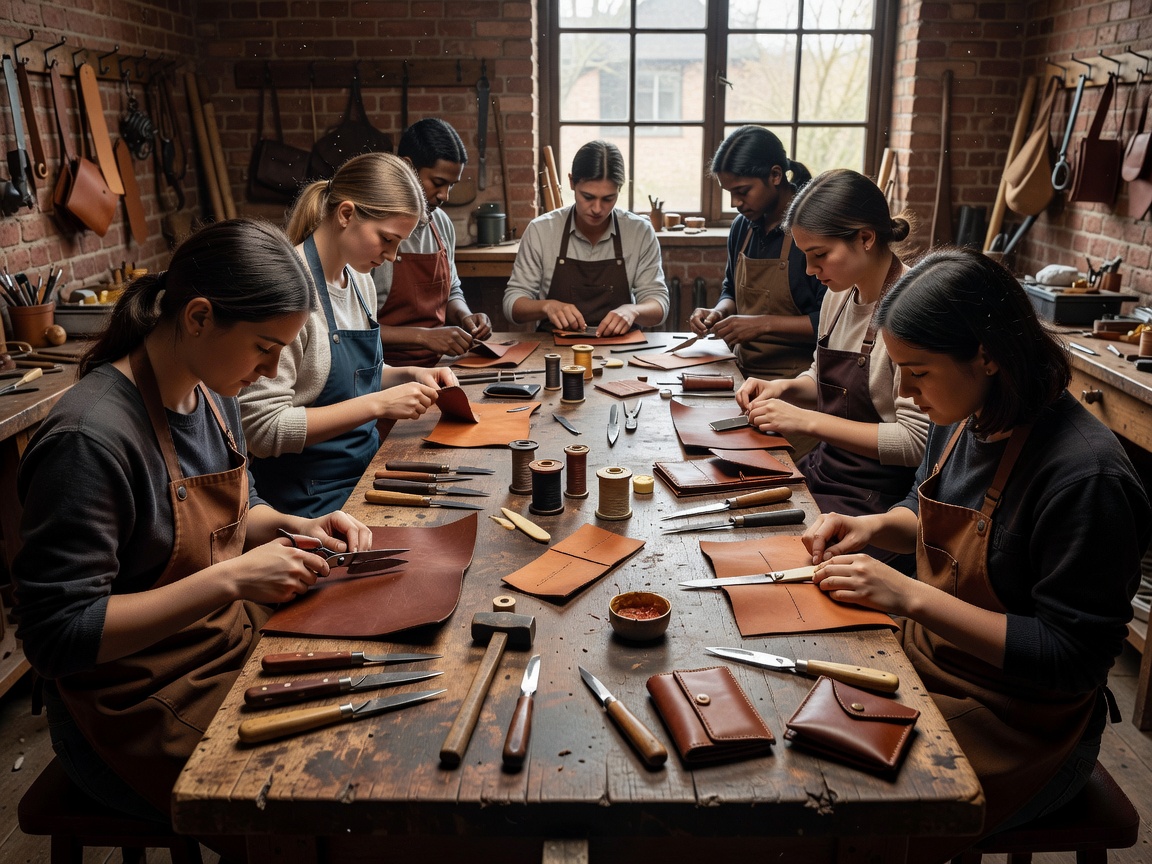
Workshop formats differ more than their names suggest. A beginner class may provide prepared pieces and a narrow sequence. An intermediate class may expect tool confidence and independent measuring. A private session may be tailored to one project, while a demonstration prioritises observation. Read the learning outcome before judging the format.
Typical structure
Many sessions begin with a safety briefing, material introduction and tool demonstration. The group may then mark, cut, punch, stitch or finish a prepared project. Ask how much time is hands-on and how much is demonstration. Project complexity, group size and instructor support affect the pace.
Tools and materials
Confirm what is supplied. Common tools include knives, rulers, mallets, punches, stitching needles, thread, edge tools and adhesives. Some workshops provide pre-cut leather; others expect participants to cut pattern pieces. Ask whether the finished object can be taken home, whether additional materials cost extra and what happens if a part is damaged.
Skill and access
Check the minimum age, hand strength requirements, seated or standing work, lighting, ventilation and tool-handling expectations. Ask about allergies, hearing access, visual access and breaks. A good provider should explain the workspace without making assumptions about ability. Accessibility information may need to be confirmed directly.
Booking questions
- What is the exact project and approximate duration?
- Which operations are completed by participants?
- Are tools, leather and protective equipment included?
- What language is used for instruction?
- What are the cancellation, transfer and photography policies?
- Are current dates, prices and availability confirmed on the provider’s own channel?
Good for
- First-time makers who want a controlled project.
- Visitors who need a clear time commitment.
- Experienced makers seeking a technique demonstration.
What to know
Schedules, prices, instructors, travel conditions and accessibility arrangements can change. This guide does not list current bookings or endorse a provider. Confirm every operational detail before payment.
A clear brief is more useful than a dramatic workshop description.