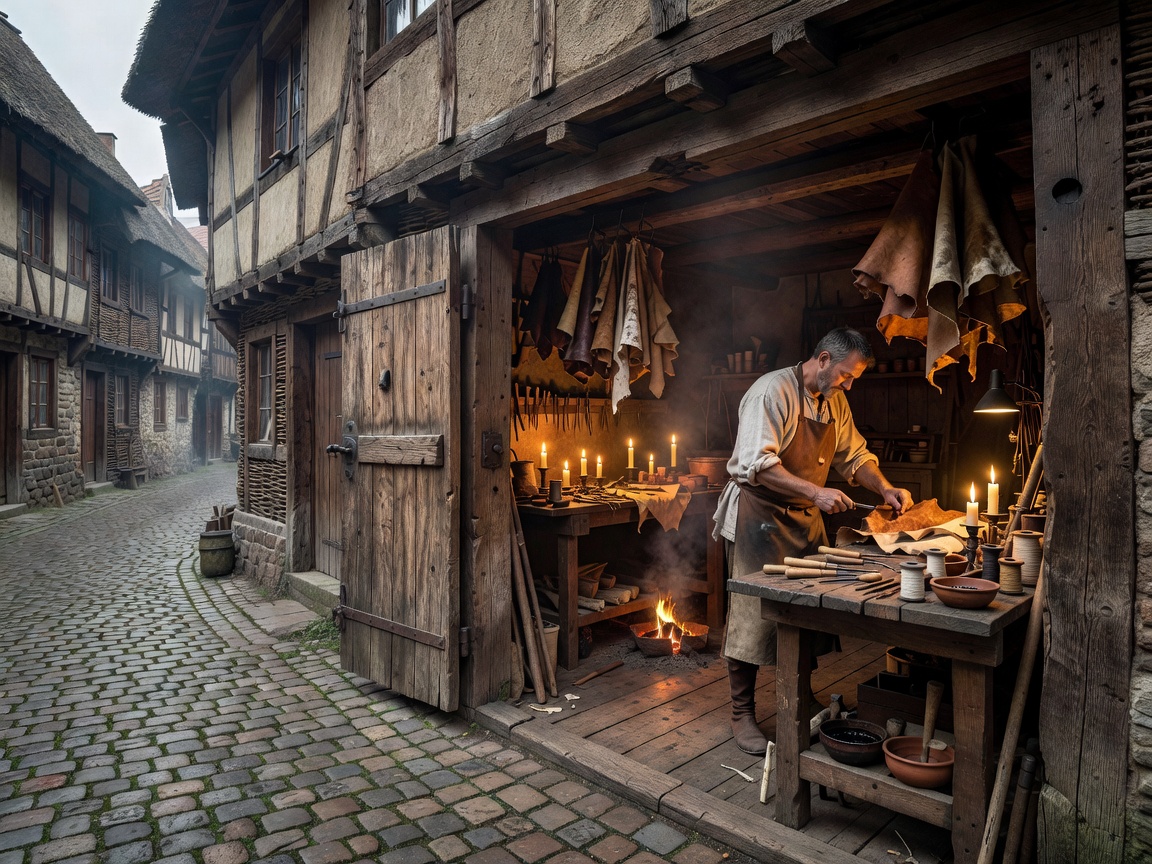
Leather work is distributed across Europe rather than contained in one official centre. Regions developed different specialisms through local livestock, trade, guild systems, industrial investment, transport and changing consumer demand. A contemporary studio may use hides from another country, tools made elsewhere and methods shared through international teaching. Treat regional identity as context, not proof of quality.
What a region can tell you
Regional research can reveal the kind of work a visitor may encounter. A place with a long saddlery history may emphasise heavy construction, harness details and repair. A town shaped by footwear production may show pattern cutting, clicking and machine assembly. A design-focused city may combine hand techniques with small-batch prototyping. These are tendencies, not guarantees.
Italy has several recognised leather and footwear districts, including areas associated with tanning, bags and shoes. Spain has strong traditions in saddlery, footwear and leather goods. France has long-established luxury and equestrian craft histories, while Portugal is known for substantial footwear and small manufacturing networks. The United Kingdom and Ireland retain varied saddlery, bookbinding, repair and independent studio practices. Central and northern European workshops also contribute strong traditions in harness, footwear, upholstery and tool use. Boundaries overlap, and attribution can be debated.
Workshop environment
Compare the physical setup before choosing a visit. A teaching studio may have shared benches, hand tools and prepared components. A production workshop may be quieter, more specialised and less suitable for public access. A tannery or finishing facility has different safety requirements from a small maker’s room. Ask whether the experience is a demonstration, a guided project or observation only.
Material availability
Local proximity does not guarantee local material. Leather merchants often source internationally. Ask about tannage, thickness, finish, traceability information and available offcuts. A workshop using local techniques may still work with imported hides. This is normal in a connected supply chain and should be described accurately.
Good for
- Planning a craft-focused trip without assuming every studio accepts visitors.
- Comparing hand production, repair and industrial craft environments.
- Building better questions about tools, materials and teaching format.
What to know
- There is no single European leather method.
- Availability, opening hours and access change. Confirm directly.
- Historical claims can be local, recent or contested. Check the wording used by the provider.
This site is an independent guide. It does not represent, rate or accredit named workshops.